Thyroid & Nutrition: What to Eat, What to Avoid and When Diet Isn't Enough
In the early 1980s, India ran one of the largest public health experiments in its history: it began iodizing salt nationwide to eliminate goitre, a swelling of the thyroid gland that had been endemic in entire regions, particularly the sub-Himalayan belt. Instead of a targeted, localised approach, the government decided on a pan-Indian approach, taking into consideration that a majority of the districts surveyed across the country showed iodine deficiency. The program was called the Universal Salt Iodisation (USI) and was a definitive success. By the time of the most recent National Family Health Survey, India had officially moved from iodine-deficient to iodine-replete status. Goitre, once common enough to be considered a normal endemic feature of certain regions, is a rare sight today.
And yet thyroid disorders did not disappear. Today, population surveys estimate that close to one in ten Indian adults lives with some form of thyroid dysfunction, and hospital-based studies from northern India have recorded dysfunction in as many as a quarter of the patients tested. More common today are the autoimmune-driven set of thyroid conditions, of which many are still deeply tied to what people eat.
This little historical fact is a useful entry point into the broader relationship between nutrition and the thyroid gland, the small, butterfly-shaped organ in the neck that regulates metabolism, energy use, body temperature, heart rate, and even mood. Our diet does not simply act as fuel from calories for that system; several nutrients are literal raw material for thyroid hormone, while others can meaningfully interfere with how the gland functions.
How the thyroid works
The pituitary gland, at the base of the brain, releases TSH (thyroid-stimulating hormone), which instructs the thyroid to produce hormone. The thyroid responds with T4 (thyroxine), a storage form, and smaller amounts of T3 (triiodothyronine), the active form that does the actual work inside cells. Most circulating T4 is converted into T3 in the liver, kidneys, and other tissues.
Two broad malfunctions can occur in this system. On the one hand, if the thyroid produces too little hormone, the result is hypothyroidism. TSH usually rises as the pituitary tries to stimulate the thyroid. Symptoms can include fatigue, weight gain, feeling unusually cold, dry skin, constipation and low mood.
When the thyroid produces too much hormone, on the other hand, it is called hyperthyroidism. TSH usually falls, while symptoms can include unexplained weight loss, a fast or irregular heartbeat, anxiety, feeling unusually hot and difficulty sleeping. Blood tests, usually starting with TSH and often including free T4, are used to assess thyroid function. Other tests may be added depending on the suspected condition.
Key nutrients the thyroid needs
Several nutrients play important roles in thyroid hormone production and metabolism. This does not mean that taking more of them will make the thyroid work better as the goal is to avoid deficiency, not to consume excessive amounts.
Iodine
Iodine is essential for making thyroid hormones. Both T4 and T3 contain iodine, which makes adequate iodine intake fundamental to thyroid function.
In India, iodised salt remains an important source, along with foods such as dairy products, seafood and eggs. India's salt-iodisation programme dramatically reduced iodine-deficiency disorders. But iodine is a good example of why more is not always better. Excessive iodine intake can also disturb thyroid function, particularly in people who are already susceptible to thyroid disease. For most people, getting iodine through a normal diet is preferable to taking iodine supplements without medical advice.
Selenium
Selenium is involved in the enzymes that help convert T4 into T3. It also contributes to the thyroid's antioxidant defence system.
Fish, eggs, meat, legumes, seeds and nuts can provide selenium. Brazil nuts are particularly rich in it, although their selenium content can vary considerably, so eating large quantities is unnecessary.
Zinc
Zinc is involved in thyroid hormone production and metabolism. It can be obtained from foods such as legumes, seeds, nuts, dairy products, whole grains and meat.
People following predominantly plant-based diets can sometimes have lower zinc absorption because plant foods contain compounds that reduce how much zinc the body absorbs. This makes dietary variety particularly useful.
Iron
Iron is important for several processes involved in thyroid hormone production. Iron deficiency can therefore affect thyroid function, particularly when the deficiency is significant. This is especially relevant in India, where iron-deficiency anaemia remains common, particularly among women.
Iron deficiency and hypothyroidism can also produce overlapping symptoms such as fatigue, weakness and difficulty concentrating. If symptoms persist despite apparently well-controlled thyroid function, a doctor may consider checking iron status along with other possible causes.
Iron supplements, however, should not be taken simply because fatigue is present. Too much iron can also cause problems, so supplementation should be based on an identified deficiency or medical advice.
Vitamin D
Vitamin D has an important role in immune regulation, which is one reason researchers have looked closely at its relationship with autoimmune thyroid diseases such as Hashimoto's thyroiditis and Graves' disease.
Low vitamin D levels are common in India despite the country's abundant sunlight. Our generally indoor lifestyles, high levels of air pollution, limited sun exposure during early hours of the day and other factors can contribute to the deficiency. Correcting vitamin D status is a low-risk step often recommended alongside treatment for autoimmune thyroid conditions.
Foods that support thyroid health
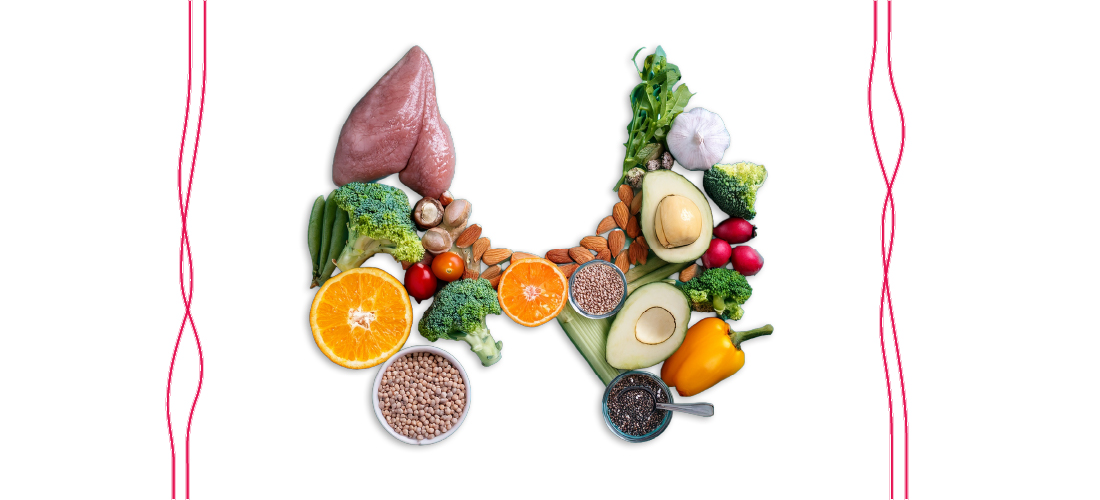
A thyroid-supportive diet doesn't require anything restrictive or unusual. It rather mostly requires consistency across a few nutrient categories like seafood and fish, which combine iodine, selenium, and often vitamin D; eggs, for iodine, selenium, and protein; dairy, for iodine and frequently fortified vitamin D; pumpkin and sunflower seeds, for zinc and selenium respectively; legumes and lentils, a natural source of iron and zinc that fits comfortably into vegetarian diets common across much of India; and whole grains and nuts, for additional zinc, magnesium, and steady energy. A balanced diet also makes it easier to avoid another common problem: relying heavily on processed foods while unintentionally missing important micronutrients.
What about cabbage, cauliflower and other cruciferous vegetables?
Cruciferous vegetables have developed something of a bad reputation among people with thyroid disorders.
Cabbage, cauliflower, broccoli, kale and mustard greens contain compounds known as goitrogens, which can interfere with iodine utilisation under certain circumstances. But this does not mean people with thyroid disease need to avoid these vegetables.
For most people eating an adequate diet, normal amounts of cooked cruciferous vegetables are not a concern. Cooking also reduces their goitrogenic activity.
The situation is different when someone consumes very large amounts of raw cruciferous vegetables while also having severe iodine deficiency. That combination can become relevant to thyroid function.
What should you avoid or limit?
While this list is quite short, it deserves an equal amount of importance.
Excessive iodine supplements
Iodine is essential, but taking large amounts does not make the thyroid healthier. In susceptible people, excessive iodine can trigger or worsen thyroid dysfunction. Iodine supplements should therefore not be started routinely without medical advice.
Large amounts of soy around thyroid medication
Soy foods such as tofu, tempeh and soy milk can be part of a healthy diet. They do not need to be completely avoided because of thyroid disease.
Soy, particularly isolated soy protein in large amounts, can interfere with thyroid hormone absorption and function. People taking thyroid medication should follow their doctor's instructions on when to take it and whether there should be a gap between the medication and certain foods or supplements.
Highly processed foods
There is nothing uniquely "toxic" about processed food for the thyroid. The concern is more practical: a diet dominated by highly processed foods can displace foods that provide protein, fibre and essential micronutrients. They can worsen the inflammation and insulin resistance that compound thyroid-related weight and energy problems.
Unregulated thyroid supplements
"Thyroid support" supplements deserve particular caution. Some products marketed for thyroid health have been found to contain undisclosed amounts of thyroid hormones or iodine. Taking these products without medical supervision can potentially push thyroid hormone levels too high. A supplement labelled "natural" is not automatically safe for the thyroid.
Thyroid, metabolism and weight
Weight gain is one of the symptoms people most commonly associate with an underactive thyroid. And if you have hypothyroidism, the difficulty losing weight can be very real.
An underactive thyroid can reduce energy expenditure and can also cause some fluid retention. But hypothyroidism usually does not explain large amounts of weight gain on its own. This is also why an increasingly restrictive diet is not necessarily the answer.
If thyroid hormone levels are low, correcting the underlying hormone deficiency is important. Once hypothyroidism is appropriately treated, nutrition and physical activity can play their usual roles in managing weight and overall health. Nutrition alone typically cannot reverse the metabolic effects of untreated hypothyroidism; the underlying hormone deficiency usually needs correction, most often through thyroid hormone replacement, before diet and exercise produce their expected results. Weight changes accompanied by fatigue, cold intolerance, hair thinning, or irregular periods point toward a thyroid evaluation rather than a stricter diet.
Thyroid nodules are a different issue
Sometimes the concern is structural: a thyroid nodule, which is a lump or area of abnormal tissue within the thyroid gland. Thyroid nodules are common, particularly as people get older, and they occur more frequently in women. Sometimes they are found incidentally during an ultrasound or examination performed for another reason. Most thyroid nodules are benign. Their significance depends on factors such as their size, growth and appearance on ultrasound, and in the case of nodules, nutrition has a much smaller role.
There is no specific food that has been shown to reliably shrink an existing thyroid nodule. Severe iodine deficiency can contribute to the development of goitre and thyroid nodules at a population level, which is one reason iodine fortification has been so important. But if a person already has adequate iodine intake, changing their diet is not a treatment for an existing nodule.
What to do if nutrition isn't enough?
Nutrition is a genuine and often ignored aspect for thyroid health, but it cannot substitute for medical evaluation and treatment if there are structural or hormonal problems of the thyroid gland.
Symptoms like fatigue, unexplained weight changes, a racing heartbeat, unusual sensitivity to cold or heat, changes in your bowel habits, or a new swelling or fullness in the neck all point towards the necessity of a medical evaluation, typically blood work covering TSH, free T4, and thyroid antibodies where autoimmune disease is suspected.
The same applies if you already have a thyroid condition but your symptoms are changing. Adjusting your diet or adding supplements on your own can sometimes make the picture more complicated rather than clearer.
Why choose RIVEA for thyroid care?
RIVEA offers specialist assessment and image-guided expertise under one roof. Thyroid nodules can be assessed with appropriate imaging, while patients with benign nodules that require treatment may have minimally invasive options such as radiofrequency ablation (RFA) or thyroid artery embolisation (TAE), depending on the nodule and individual clinical factors. From initial evaluation to treatment planning, RIVEA's approach is centred on understanding the thyroid problem first and choosing the least invasive appropriate option where possible.
Click here to learn more about:
Thyroid Nodules
For any inquiries, post your query here:
Ask Rivea
Contact us today to explore your options.
Call Now