When Do Varicose Veins Need Treatment? What Your Legs Are Telling You and When to Act
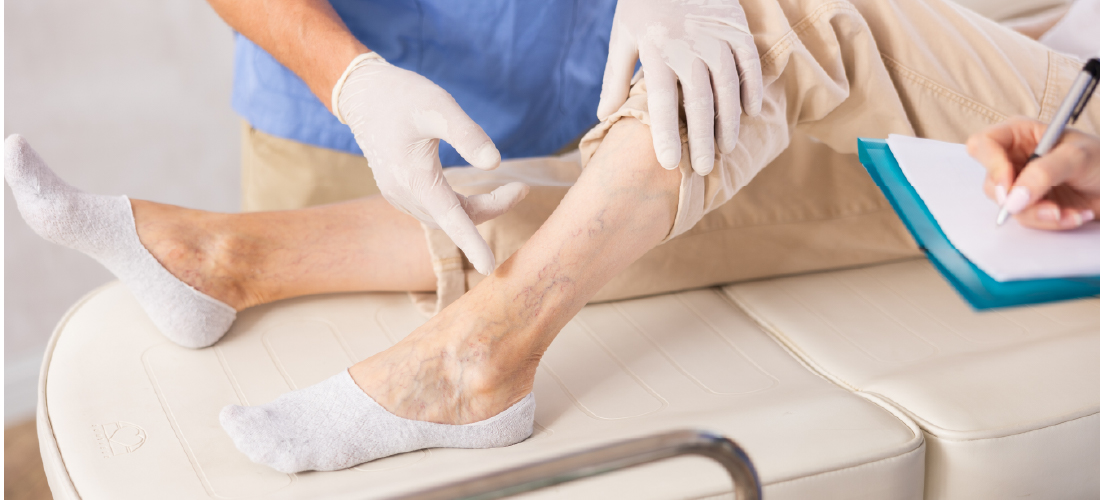
Are varicose veins really just a cosmetic issue?
Varicose veins are often described as a cosmetic concern, but this is an incomplete picture. In clinical terms, they are a visible sign of chronic venous disease, a condition affecting how blood returns from the legs to the heart. While some people experience no symptoms beyond visible veins, many have underlying functional changes that can progress over time.
A common reason varicose veins go untreated is ignorance: patients may believe symptoms such as heaviness or swelling are simply part of ageing, standing work, or fatigue. In reality, these symptoms can reflect measurable changes in venous function.
This blog is written as a practical guide to help you interpret what your symptoms may mean, understand where you sit on the clinical spectrum, and recognise when assessment is appropriate.
What is actually happening beneath the skin?
Veins in the legs carry blood back to the heart against gravity. To do this efficiently, they rely on one-way valves that prevent blood from flowing backwards.
When these valves weaken or fail, blood can fall back down the vein through a process known as venous reflux. This leads to:
- Pooling of blood in the lower legs
- Increased venous pressure
- Gradual distension and twisting of superficial veins
The veins you can see are therefore not the primary problem, but the result of an underlying functional issue. Over time, persistent high pressure in the venous system can affect surrounding tissues, leading to inflammation, swelling, and skin changes.
This broader condition is referred to as chronic venous insufficiency (CVI).
What symptoms should I look out for with varicose veins?
Varicose veins present along a spectrum from visible changes to more subtle but clinically significant symptoms.
Visible and physical changes may include:
- Twisted, bulging veins
- Blue or purple discolouration
- Clusters of smaller surface veins
Common symptoms include:
- Aching or dull pain in the legs
- A feeling of heaviness or fatigue, especially by evening
- Throbbing or burning sensations
- Itching over or around veins
- Restlessness in the legs at night
These symptoms often:
- Worsen later in the day
- Increase in warm weather
- Become more noticeable after long periods of standing or sitting
Swelling (oedema) is another key sign. It typically:
- Appears around the ankles or lower legs
- Worsens through the day
- Improves with elevation or overnight rest
As venous pressure increases, the skin itself may become involved. You might notice:
- Darkening or staining around the ankle (haemosiderin deposition)
- Eczema-like irritation over the vein
- Firm, tight skin (lipodermatosclerosis)
Importantly, some patients have significant symptoms without prominent visible veins. Pain, heaviness, and swelling alone can indicate underlying venous disease and should not be dismissed.
How are varicose veins graded clinically (CEAP classification)?
Clinicians often use the CEAP classification to describe the severity of venous disease. While it may sound technical, it can be understood simply as a scale from no visible disease to advanced complications:
- C0: No visible signs
- C1: Small surface veins (spider veins)
- C2: Varicose veins present
- C3: Swelling (oedema)
- C4: Skin changes (pigmentation, eczema, hardening)
- C5: Healed venous ulcer
- C6: Active venous ulcer
Why this matters: your position on this scale helps determine how urgently treatment should be considered.
Many people present at C2 or C3 and assume their condition is mild. However, symptoms and underlying reflux may indicate more advanced disease than is visible on the surface.
How are varicose veins diagnosed?
Assessment begins with a clinical history and examination. A clinician will ask about:
- Symptom patterns (timing, triggers, severity)
- Duration and progression
- Family history
- Previous episodes such as swelling or vein inflammation
The key diagnostic test is a duplex ultrasound scan. This is the standard investigation for venous disease and provides essential information that cannot be determined by visual inspection alone.
A duplex scan:
- Maps the structure of your veins
- Measures blood flow direction
- Identifies areas of valve failure and reflux
It is non-invasive, painless, and typically performed in an outpatient setting. A gel is applied to the skin, and a handheld probe is used to assess the veins in real time.
In selected cases, particularly when deeper veins are involved, additional imaging such as CT venography may be recommended.
When should I see a doctor about varicose veins?
You should consider clinical assessment if you experience:
- Persistent pain, heaviness, or fatigue affecting daily activities
- Swelling that worsens through the day or limits mobility
- Visible veins that are increasing in size or number
- Changes in skin colour or texture around the ankle
More urgent evaluation is recommended if you have:
- Bleeding from a varicose vein, even if it stops on its own
- A painful, red, firm area along a vein (suggestive of superficial thrombophlebitis)
- Symptoms that began during pregnancy and have not resolved
- A family history of venous disease with early symptoms
Earlier assessment provides more options and can prevent progression.
When is treatment definitely recommended?
Treatment is clearly indicated in the following situations:
- Confirmed venous reflux on duplex ultrasound with associated symptoms
- Superficial thrombophlebitis, especially if recurrent or extending
- Bleeding varicose veins
- Skin changes such as pigmentation, eczema, or hardening
- Active or healed venous ulcers
In addition, treatment is appropriate when:
- Symptoms significantly affect quality of life
- Conservative measures have not provided adequate relief
It is important to note that you do not need to wait for advanced complications. Symptoms alone, when supported by diagnostic findings, are a valid reason to consider treatment.
What happens if varicose veins are left untreated?
Chronic venous disease is typically progressive. Valve dysfunction does not correct itself, and over time:
- Symptoms may become more persistent
- Swelling can increase
- Skin changes may develop
- The risk of ulceration rises
Venous ulcers are one of the most significant complications. They are:
- Chronic and slow to heal
- Painful
- Associated with reduced mobility and quality of life
Importantly, many of these outcomes are preventable with timely intervention. Delaying treatment can also limit future options and make management more complex.
Can lifestyle changes or compression stockings treat varicose veins?
Conservative management plays an important role, but it has clear limitations.
Compression stockings:
- Help improve blood flow by applying graduated pressure
- Can reduce swelling and discomfort
- Are particularly useful for symptom control
Lifestyle measures include:
- Elevating the legs when resting
- Regular walking or physical activity
- Avoiding prolonged standing or sitting
- Maintaining a healthy weight
These approaches can:
- Improve symptoms
- Slow progression to some extent
However, they do not correct valve failure or eliminate reflux. In other words, they manage the effects but do not treat the underlying cause.
For many patients, conservative care is best viewed as an adjunct to definitive treatment, rather than a substitute.
What treatment options are available for varicose veins?
Treatment is tailored to the severity of disease, underlying anatomy, and your symptoms. Broadly, options fall into three categories:
1. Lifestyle & Home Care
- Leg elevation: Raising your legs above heart level periodically can reduce venous pressure and improve circulation.
- Compression stockings: Specially designed elastic stockings support the veins, reduce discomfort, and may help prevent progression.
These measures are often the first step but are rarely sufficient on their own if reflux is present.
2. Minimally Invasive Procedures
These are now the mainstay of treatment for most patients:
- VenaSeal™ (Glue Ablation): A medical adhesive is delivered via a fine catheter to seal the affected vein. It does not require heat, multiple injections of anaesthetic, or sutures, and patients can typically walk out shortly after the procedure.
- Sclerotherapy: A solution is injected into smaller varicose or spider veins, causing them to close and gradually fade. This is often used for milder disease or residual veins after primary treatment.
- Perforator ablation: In cases where deeper connecting veins contribute to symptoms or skin changes, targeted thermal or chemical energy is used to close these vessels from within.
3. Surgical Treatment
- Ligation and stripping: The affected vein is tied off and, in some cases, removed. This approach is now less commonly required due to the effectiveness and safety of minimally invasive techniques, but may still be appropriate in selected cases.
How do I know where I stand and what should I do next?
Varicose veins exist on a spectrum, and so does the need for treatment. What matters most is not just how veins look, but what they indicate about underlying venous function.
Ignoring symptoms or waiting indefinitely can allow progression that may otherwise be prevented.
If you are unsure, the most appropriate next step is assessment, not assumption. A consultation combined with a duplex ultrasound can clarify:
- Whether reflux is present
- How advanced the condition is
- What options are available to you
Understanding where you stand allows you to make informed decisions based on evidence and requirements.
Why choose RIVEA for varicose vein care?
RIVEA is India’s leading centre dedicated exclusively to vascular, endovascular, and interventional radiology care. This focused approach ensures that venous disease is assessed and treated with a high degree of clinical precision.
At RIVEA, care is structured around:
- Specialist-led treatment: Management by dedicated vascular experts with experience in advanced, image-guided therapies
- Advanced imaging: High-resolution duplex ultrasound and diagnostic tools for accurate mapping of venous disease
- Individualised planning: Treatment decisions based on your specific vein anatomy, symptom profile, and clinical stage
- Minimally invasive care pathways: Procedures designed to minimise discomfort, avoid hospital admission, and support rapid return to daily activity
- Proven clinical outcomes: Effective relief from symptoms such as pain, heaviness, and swelling, alongside improvement in visible veins
This combination of clinical expertise and technology allows for treatment that is not only effective, but appropriately tailored to avoid both under-treatment and unnecessary intervention.
Click here to learn more about:
Varicose Veins
For any inquiries, post your query here:
Ask Rivea
Contact us today to explore your options.
Call Now