
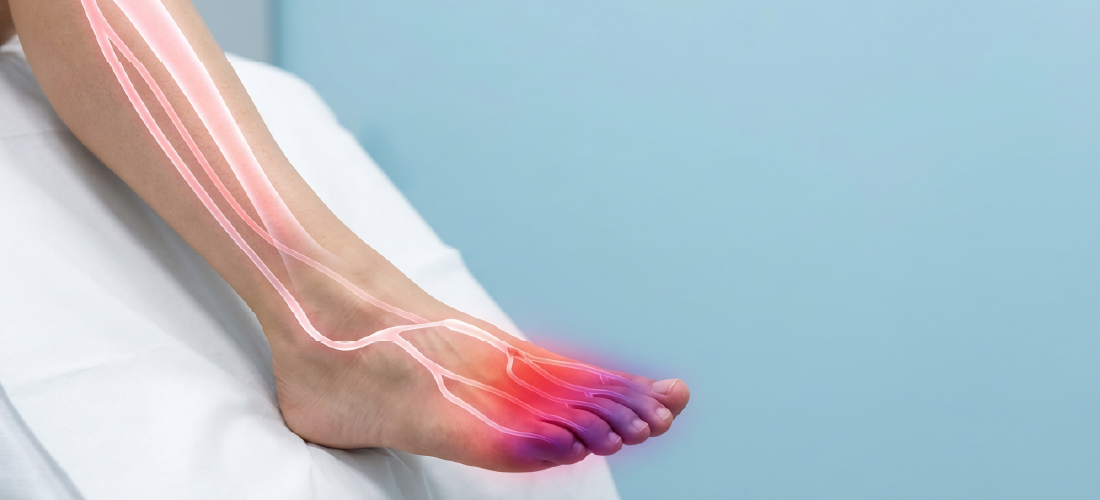
Peripheral Artery Disease (PAD) Treatment
Peripheral artery disease (PAD) is a condition in which narrowed or blocked arteries reduce blood flow to the legs and feet. It is most often caused by a buildup of fatty deposits and cholesterol, known as plaque, inside the artery walls.
While PAD cannot be reversed, there are procedures to open blood vessels and restore proper circulation.
Depending on the severity of the disease, treatment may involve medication and lifestyle changes, exercise therapy, a minimally invasive procedure, surgery, or a combination of approaches. At RIVEA Vascular Institute, PAD treatment is planned around these factors.
How is peripheral artery disease treated?
If the condition is mild, with only a few symptoms, patients may benefit from exercise, medication and careful management of conditions such as diabetes, high blood pressure and high cholesterol. But PAD can cause significant difficulty walking or lead to wounds that do not heal because the tissues are not receiving enough blood.
In these cases, when blood flow is severely reduced, restoring circulation may become necessary. This can be done through an endovascular procedure such as angioplasty or stenting, through vascular surgery such as bypass, or through a combination of surgical and minimally invasive techniques.
Treatment may aim to:
- Relieve leg pain and improve walking ability
- Help non-healing wounds heal
- Reduce the risk of cardiovascular complications
- Preserve the limb when blood flow is critically reduced
How does a vascular specialist decide which treatment you need?
Arterial blockage differs from person to person. Consequently, the treatment needed will also differ.
The treatment plan depends on several factors.
Your symptoms
A specialist will first assess what you are experiencing and how it affects your daily activities. This may include:
- Pain or cramping while walking
- Reduced walking distance
- Pain in the feet or legs at rest
- Non-healing wounds
- Changes in skin colour or temperature
- Tissue loss or gangrene
The severity of reduced blood flow
The extent of circulation impairment is assessed using clinical examination and vascular tests. The specialist will determine whether the disease is causing a mild reduction in circulation, significant symptoms, or a threat to the limb.
The location and extent of arterial disease
Imaging helps identify:
- Which artery or arteries are affected
- The degree of narrowing
- The length of a blockage
- Whether there are multiple blockages
- Whether disease is present in more than one arterial segment
- The condition of the arteries beyond the blockage
These details can influence whether angioplasty, stenting, atherectomy, bypass surgery or a combination of treatments is appropriate.
Your overall health
Diabetes, kidney disease, high blood pressure, cholesterol, heart disease, previous vascular procedures and other medical conditions may all influence treatment decisions. Your doctor will also consider whether you are able to undergo a particular procedure and what approach is likely to provide the most appropriate balance of benefit and risk.
How are arterial blockages identified?
A detailed understanding of your arterial circulation is important before deciding whether an intervention is needed.
Clinical examination
Your specialist may examine the pulses in your legs and feet and look for changes in skin colour, temperature, hair growth, wounds or other signs of reduced circulation.
Ankle-Brachial Index (ABI)
The ankle-brachial index (ABI) compares blood pressure at the ankle with blood pressure in the arm. An ABI of 0.90 or below is considered abnormal and supports a diagnosis of peripheral artery disease. Readings between 0.91 and 0.99 are borderline, while values above 1.40 suggest that the ankle arteries may be difficult to compress.
In people with diabetes or chronic kidney disease, calcified, stiff arteries can produce falsely high ABI readings. In these cases, a toe-brachial index (TBI), which compares toe and arm blood pressure, can help assess circulation. A TBI of 0.70 or below is considered abnormal.
Arterial Doppler Ultrasound
Doppler ultrasound uses sound waves to assess blood flow through the arteries. It can help identify narrowed or blocked segments and evaluate blood flow around the affected area.
CT Angiography or MR Angiography
These imaging tests provide a more detailed view of the arterial system. They can help map the location and extent of disease, particularly when a procedure is being considered.
Catheter Angiography
Catheter angiography provides detailed, real-time images of the arteries. A thin catheter is guided into the arterial system and contrast material is used to make the blood vessels visible on imaging.
In selected patients, angiography may be performed as part of the treatment itself, allowing the specialist to assess the blockage and proceed with an endovascular procedure when appropriate.
What are the treatment options?
PAD treatment may involve one or more approaches depending on the severity and anatomy of the disease.
Medical treatment and risk-factor management
Medical management is an important part of PAD care, whether or not a procedure is performed. Treatment may include medicines that reduce the risk of blood clots and cardiovascular complications, along with medicines to control cholesterol, blood pressure or other contributing conditions. Your doctor will select medication based on your individual health and risk factors.
Regular walking or supervised exercise therapy may also be recommended, particularly for people with intermittent claudication (muscle pain or cramping in the legs during walking that improves with rest due to reduced blood flow). Quitting smoking is particularly important. Smoking damages the lining of blood vessels, accelerates atherosclerosis and increases the risk of PAD progressing. Diabetes, high blood pressure and high cholesterol should also be carefully managed. These conditions can contribute to the progression of arterial disease and increase the risk of complications.
Medical treatment continues to be important even after a procedure. Opening a blocked artery treats a particular area of disease, but it does not remove the underlying tendency for plaque to develop in the arteries. Managing these factors helps reduce the risk of PAD progression and cardiovascular events such as heart attack and stroke.
When is a procedure considered?
A procedure becomes more urgent when blood flow is severely reduced. Pain while resting, a non-healing wound, tissue loss or gangrene can indicate that the limb is not receiving enough blood to remain healthy. This is known as chronic limb-threatening ischaemia and requires prompt vascular assessment.
Importantly, the presence of a blockage on an imaging scan does not automatically mean that it needs to be opened. Some blockages can be managed safely without an intervention. The decision is based on the symptoms, the severity of reduced blood flow, the condition of the limb and the likelihood that treatment will provide meaningful benefit.
Angioplasty
Angioplasty is a minimally invasive procedure used to widen a narrowed or blocked artery. A thin catheter is introduced through an artery and guided to the affected segment using imaging. A small balloon may then be inflated to widen the narrowed area and improve blood flow.
Angioplasty can improve blood flow when leg pain limits daily activities despite medication and structured exercise. It is also used to restore circulation in patients with chronic limb-threatening ischaemia, particularly when poor blood flow is contributing to rest pain or non-healing wounds. A stent may be added if the artery does not remain adequately open after balloon treatment.
Stenting
A stent is a small mesh tube placed inside an artery to help keep it open after angioplasty. It is often used when balloon treatment leaves significant narrowing, causes a flow-limiting dissection or fails to provide an adequate result.
Stents are also used in certain arterial segments and types of blockage where additional support is needed to maintain blood flow. The choice depends on the artery involved and the available stent options, among other factors. Not every angioplasty requires a stent.
Atherectomy
Atherectomy uses a specialised catheter to modify or remove plaque from inside an artery. It may be considered in selected patients, including some with heavily calcified or complex arterial plaque. In certain cases, atherectomy can be used alongside other endovascular techniques to prepare the artery for further treatment. Atherectomy can help prepare a heavily calcified artery for balloon angioplasty or stenting but it is not a routine first-line technique for every blockage.
Bypass surgery
Bypass surgery creates an alternative route for blood to flow around a severely narrowed or blocked artery. It is particularly relevant when long or extensive blockages, multiple affected arterial segments or the location of the disease make an endovascular approach less suitable or less likely to provide durable blood flow.
Bypass may be preferred for some patients with chronic limb-threatening ischaemia when a suitable vein is available and the patient can tolerate surgery. Endovascular treatment may be more appropriate when surgical risk is high, suitable vein is unavailable or the arterial anatomy favours a catheter-based approach. The decision considers the likelihood of successful revascularisation, long-term durability, overall health and the patient's treatment preferences.
Hybrid treatment
Hybrid treatment combines open vascular surgery with an endovascular procedure, such as angioplasty or stenting, during the same treatment plan. It is particularly useful when disease affects different arterial segments that are best treated using different techniques.
For example, open surgery may be used to remove plaque from the common femoral artery, while angioplasty or stenting addresses a blockage higher up in the circulation. Combining the approaches can restore blood flow across multiple affected segments while avoiding the need for a more extensive open operation.
Limb salvage for advanced stages
Chronic limb-threatening ischaemia can cause tissue loss and gangrene due to severely reduced blood flow. The priority is to determine whether blood flow can be restored sufficiently to support the affected tissues and give the limb the best possible chance of healing.
Angioplasty and stenting are options when the blockages can be treated endovascularly. Bypass surgery may be preferred for extensive disease when suitable anatomy and a usable vein conduit are available. Hybrid treatment can address disease involving multiple arterial segments.
Limb salvage also requires coordinated wound care, infection management, diabetes control and assessment of the foot and surrounding tissues. In patients with diabetes, poor circulation can prevent even a small foot wound from healing and increase the risk of tissue loss. Early assessment of non-healing wounds, rest pain or signs of gangrene is essential. A multidisciplinary vascular team should evaluate revascularisation options before amputation is considered, whenever feasible.
Why Choose RIVEA for PAD Care?
RIVEA Vascular Institute provides specialist evaluation and treatment for a wide range of peripheral arterial conditions, from symptomatic PAD to complex disease requiring limb-preservation strategies.
Specialist vascular expertise
PAD care is led by a dedicated vascular team with experience in managing both routine and complex arterial disease.
Advanced imaging and intervention
RIVEA's Hybrid Operating Room combines advanced imaging capabilities with surgical facilities, allowing selected endovascular and surgical techniques to be performed within an integrated treatment environment.
Multiple treatment approaches
Patients can be assessed for medical management, minimally invasive procedures, vascular surgery or hybrid treatment according to their individual arterial anatomy and clinical needs.
Focus on limb preservation
Patients with advanced PAD, non-healing wounds and severely reduced circulation can undergo detailed vascular assessment to determine whether blood flow can be restored and the limb preserved.
Individualised treatment planning
The appropriate treatment for PAD varies from one patient to another. RIVEA's approach is to match the treatment strategy to the patient's disease, health and goals.
FAQs
Can PAD be treated without surgery?
Yes. Many patients can be managed with medical treatment, exercise and control of cardiovascular risk factors. A procedure may be considered when symptoms remain limiting despite these measures or when the limb is threatened by severely reduced blood flow.
How does a vascular specialist decide which treatment is appropriate?
The decision depends on symptoms, the extent of arterial disease, overall health and whether the goal is to improve walking ability or prevent limb loss.
For chronic limb-threatening ischaemia (CLTI), the Global Vascular Guidelines use two important assessment frameworks. WIfI (Wound, Ischemia, foot Infection) evaluates wound severity, ischaemia and foot infection to estimate limb threat. GLASS maps the arterial disease and helps assess the complexity of restoring blood flow. These assessments help guide treatment planning alongside the patient's surgical risk, available vein conduits and preferences.
What is the best treatment for a blocked leg artery?
There is no single treatment that is best for every arterial blockage. The choice depends on the location, length and severity of the blockage, the condition of the surrounding arteries, your overall health and your treatment goals.
Is angioplasty better than bypass surgery for PAD?
Neither is universally better. Angioplasty may be appropriate for selected blockages and offers a minimally invasive approach. Bypass may be considered for some extensive or complex disease.Vein quality is an important deciding factor, alongside arterial anatomy, medical fitness and the expected durability of each approach.
Does exercise help treat PAD?
Structured exercise is a core part of treatment for patients with intermittent claudication, which causes leg discomfort during walking. Supervised exercise therapy typically involves three sessions per week for at least 12 weeks, with walking intervals alternated with rest periods. Sessions generally aim to build up to 30–45 minutes of active exercise as tolerance improves.
Exercise can improve walking capacity and daily function. It is usually combined with medication and risk-factor management. For patients with rest pain, non-healing wounds or gangrene, exercise alone is not an adequate substitute for urgent vascular assessment.
What medicines are used to manage PAD?
Medication helps reduce cardiovascular risk, manage contributing conditions and, in some patients, improve walking symptoms. Treatment commonly includes:
- Antiplatelet medicines, such as aspirin or clopidogrel, to reduce the risk of cardiovascular events in appropriate patients.
- Statins to lower cholesterol and reduce cardiovascular risk.
- Blood pressure medicines to manage hypertension.
- Diabetes medicines to improve glucose control and reduce associated cardiovascular risk.
Some patients may also benefit from additional antithrombotic treatment or medicines such as cilostazol for walking symptoms, depending on their medical history and contraindications. Medication is individualised and does not replace revascularisation when blood flow needs to be restored.
How long do angioplasty, stents and bypass surgery last?
There is no single lifespan for any of these treatments. Some treated arteries remain open for years, while others narrow again within months. The risk of re-narrowing depends on the artery treated, the length and severity of the blockage, calcification, diabetes, smoking and the type of device or bypass conduit used.
Drug-coated balloons and drug-eluting stents can reduce re-narrowing in certain types of peripheral arterial disease. The US FDA's review of longer-term evidence found no indication that paclitaxel-coated peripheral devices increase late mortality, addressing an earlier safety concern.
Bypass durability depends partly on the conduit used, particularly whether a suitable vein is available. Regular follow-up, symptom review and vascular imaging when indicated help identify recurrent narrowing and determine whether further treatment is needed.
Can a completely blocked artery be opened?
Some arterial blockages can be treated using endovascular techniques, while others may be better managed with bypass surgery or a combination of approaches. Whether a blockage can and should be treated depends on its location, length, chronicity and the condition of the arteries beyond it.
Can amputation be avoided in advanced PAD?
In many patients, restoring blood flow can help heal wounds and preserve the limb. However, limb salvage is not always possible. The outcome depends on the extent of tissue damage, the severity of ischaemia, infection, the feasibility of restoring blood flow and the patient's overall health.
The Global Vascular Guidelines emphasise assessing limb threat and the potential benefit of revascularisation before deciding on amputation. They also report that outcomes after major amputation can be poor: published 30-day postoperative mortality ranges from 4% to 22%, while five-year mortality ranges from 30% to 70%. These figures reflect high-risk populations and are not estimates of an individual patient's risk.
Can PAD return after treatment?
PAD is a chronic vascular disease, so treatment of a particular blockage does not remove the underlying disease. Continued management of smoking, diabetes, cholesterol, blood pressure, exercise and other cardiovascular risk factors is important after treatment.
What are the risks of PAD treatment?
The risks depend on the procedure, the patient's health and the extent of arterial disease.
Angioplasty and stenting: Possible complications include bleeding or bruising at the catheter entry site, damage to the artery, contrast-related kidney injury and re-narrowing of the treated artery. Rarely, a clot or a blockage caused by displaced plaque can reduce blood flow.
Bypass surgery: Risks include wound infection, bleeding, blood clots and graft failure, which occurs when the bypass becomes blocked. Some patients develop recurrent narrowing or require another procedure during follow-up.
The risk of contrast-related kidney injury is particularly relevant for people with existing kidney disease. Kidney function is assessed before treatment when indicated, and the clinical team takes appropriate precautions to reduce risk. The potential benefits of restoring blood flow are weighed against these risks before a treatment plan is finalised.
What are the early symptoms of PAD, and when should someone see a doctor?
An early sign of PAD is intermittent claudication: pain, cramping or aching in the calf, thigh or buttock during walking that improves after stopping to rest. Other symptoms include cold feet, changes in skin colour, reduced hair growth on the legs and sores on the feet that heal slowly.
Anyone experiencing recurring leg pain during walking should seek medical assessment, particularly if there are risk factors such as diabetes, smoking, high cholesterol or high blood pressure. Early diagnosis can help prevent progression and reduce cardiovascular risk.
People with diabetes should check their feet daily for cuts, blisters, redness, swelling, colour changes or wounds. Reduced sensation can make injuries difficult to notice. A new foot wound, especially one that is not healing, needs prompt medical assessment. Sudden severe leg pain, a cold or pale foot, new numbness or weakness requires emergency evaluation.
How long does recovery take after PAD treatment?
Recovery depends on the procedure, the extent of arterial disease and the patient's overall health.
After uncomplicated angioplasty or stenting, patients commonly go home the same day or after an overnight stay. Light activities may resume within a few days, although strenuous activity and heavy lifting may need to be avoided temporarily.
Bypass surgery generally requires a longer hospital stay, often around 3–7 days, with several weeks of recovery at home. Returning to usual activities may take approximately 4–8 weeks or longer, depending on the operation, wound healing and general fitness.
Follow-up is important after either procedure. The care team monitors wound healing, circulation and symptoms, and arranges further vascular testing when indicated. Individual recovery instructions should take precedence over these general estimates.
What is the advantage of a Hybrid Operating Room for PAD treatment?
A Hybrid Operating Room combines the facilities of an operating theatre with advanced real-time imaging. This allows vascular surgeons and interventional specialists to perform open surgery and catheter-based procedures, such as angioplasty or stenting, in the same session when clinically appropriate.
For example, a patient with blockages in several arterial segments may need open surgery in one area and endovascular treatment in another. A hybrid setup allows angiography to assess blood flow during treatment and helps the team evaluate the result before completing the procedure.
At RIVEA, the Hybrid Operating Room supports the treatment of complex vascular disease using a coordinated approach. The specific technique depends on the patient's arterial anatomy and treatment needs.
Click here to learn more about:
Peripheral Arterial Disease (PAD)
For any inquiries, post your query here:
Ask Rivea
Contact us today to explore your options.
Call Now