
Carotid Artery Disease (CAD)
Carotid arteries are an important part of the vascular system. They are blood vessels that supply blood to the brain, face and neck. They are located in the neck and travel upwards towards the skull, carrying oxygen-rich blood to organs and tissues of the head and neck, including the brain.
A blockage of this pathway can cause severe complications. Carotid artery disease (CAD) is one such condition. When fatty deposits—called plaques—accumulate in the arteries, the vessels narrow and interfere with the supply of blood to the brain. This condition is called carotid artery disease, or carotid artery stenosis. Blood clots can develop on the plaque and eventually dislodge, traveling to an artery in the brain and obstructing blood flow. The plaque itself may rupture, with fragments breaking off and reaching the brain. Left untreated, CAD worsens over time and can lead to fatal strokes.
Common Symptoms of CAD
Carotid artery disease is often not obvious until it has progressed enough to cause a transient ischemic attack (TIA) or a mini stroke. A TIA is a temporary blockage of a small brain artery.
Symptoms of a stroke or a TIA include:

Sudden drooping of one side of the face

Numbness or weakness on one side of the body

Slurred speech and difficulty in understanding speech

Sudden difficulties in vision in one or both eyes

Dizziness and loss of balance
One of the easiest and most effective ways to recognize stroke symptoms is to remember the FAST acronym:
F – Face drooping. Is one side of the face numb or drooping?
A – Arm weakness. Is one arm weak or numb? Ask them to raise both arms—does one drift downward?
S – Speech difficulty. Is speech slurred or strange?
T – Time to call emergency services. If you see any of these signs, even briefly, call emergency medical help immediately.
In its early stages, carotid artery disease may not present any symptoms. The condition is usually noticed only when it causes a stroke.
Causes
Several factors increase the risk of developing coronary artery disease (CAD). Some are related to lifestyle choices and can be modified. Others are pre-existing conditions that can further elevate the risk:
- Smoking and tobacco use
- Obesity
- Sedentary lifestyle
- High blood pressure (hypertension)
- High cholesterol
- Diabetes
Risk Factors
Other risk factors include:
- Older age
- Male
- Family history
- Genetic factors
Prevention
To help prevent carotid artery disease or slow its progression, it’s important to adopt a heart-healthy lifestyle.
Quitting tobacco products, especially smoking, can reduce stroke risk. Maintain a healthy weight, as excess weight raises the risk of high blood pressure, heart disease, diabetes, and sleep apnea.
Eat a balanced diet rich in fruits, vegetables, whole grains, fish, nuts, and legumes, while limiting saturated fats, trans fats, cholesterol, and salt.
Regular exercise supports healthy blood pressure, boosts good cholesterol, and improves overall cardiovascular health. Consume alcohol only in moderation.
Lastly, managing chronic conditions like diabetes and high blood pressure is essential to protecting the arteries. Lifestyle changes can treat minor blockages and slow the progress of carotid artery disease.
Diagnosis
In addition to a full medical history and physical examination, the following tests may be used to diagnose carotid artery disease:
- Listening to the carotid arteries: A stethoscope is used to detect a bruit—a sound that may indicate narrowing. However, disease may still be present even without this sound.
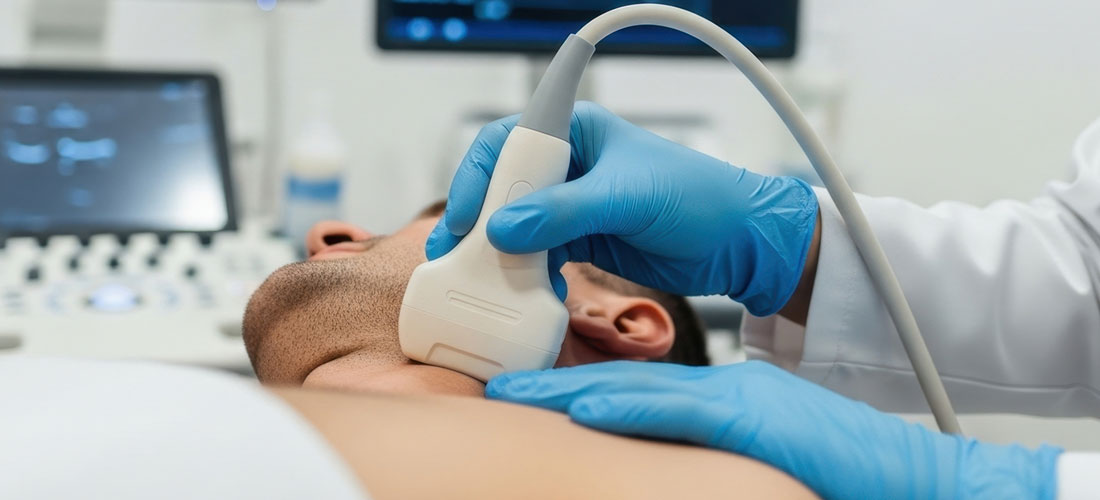
- Carotid artery duplex scan: Uses ultrasound to assess blood flow. Weak or absent signals may suggest a blockage.
- MRI: Uses magnets and radio waves to create detailed images of the body's structures. The scan is loud and done inside a tube.
- MRA (Magnetic Resonance Angiography): An MRI with contrast dye to clearly show blood vessels.
- CTA (Computed Tomography Angiography): Uses X-rays and contrast dye to produce cross-sectional images of blood vessels.
- Angiography: Involves injecting contrast dye and taking X-rays to see how narrowed the arteries are.
Treatment Options
Surgical treatment of carotid artery disease includes:
Carotid endarterectomy (CEA)
Surgical removal of plaque and clots from the carotid artery, typically recommended for patients with symptoms and significant (70% or more) narrowing.
Carotid artery angioplasty with stenting (CAS)
A minimally invasive procedure using a catheter, balloon, and stent to open narrowed carotid arteries, often used for patients who can't undergo surgery.
How TCAR works at RIVEA
Transcarotid Artery Revascularization (TCAR) is a cutting-edge procedure designed to reduce stroke risk by restoring healthy blood flow to the brain:
- A small incision is made just above the collarbone to access the carotid artery.
- A unique neuroprotection system temporarily reverses blood flow to prevent plaque from reaching the brain.
- A stent is inserted into the artery to keep it open permanently.
- The incision is closed with absorbable stitches for faster healing.
- This entire process takes under an hour, and most patients go home the next day
Why RIVEA
RIVEA is a dedicated centre focused exclusively on vascular, endovascular, and interventional radiology treatments. Your care is led by Dr. Syed Mohammed Ali Ahmed, a highly skilled vascular and endovascular surgeon with advanced training in India and Singapore and specialised expertise in aortic surgery, carotid interventions, lymphatic surgery, and complex vascular reconstruction.
What RIVEA offers:
- Advanced expertise in open and minimally invasive vascular and endovascular procedures
- Specialised care for aortic disease, carotid artery disease, limb salvage, venous disorders, and lymphatic conditions
- * Hybrid Operating Room powered by GE Healthcare for high-precision image-guided vascular interventions and enhanced procedural safety
Click here to learn more about:
Transcarotid Artery Revascularization (TCAR)
For any inquiries, post your query here:
Ask Rivea
Contact us today to explore your options.
Call Now