
TURP — Surgical BPH Treatment
A well-established surgical procedure to relieve urinary obstruction caused by benign prostatic hyperplasia (BPH), performed by our specialist urology team at RIVEA Hyderabad.
- Performed under anaesthesia
- 60–90 minute procedure
- No external incisions
What is TURP?
Transurethral resection of the prostate (TURP) is one of the most widely performed surgical procedures for men experiencing moderate to severe urinary symptoms caused by an enlarged prostate gland (benign prostatic hyperplasia, or BPH).
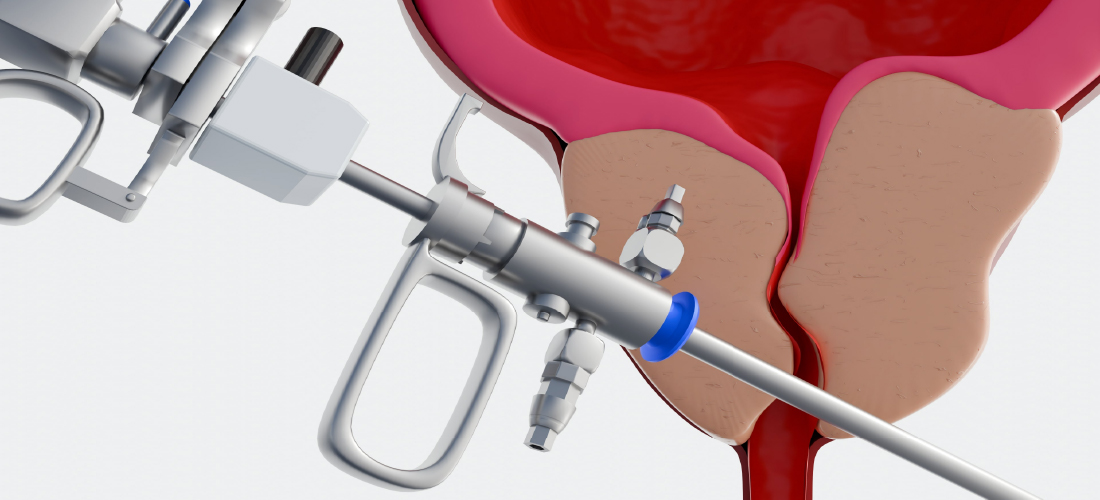
During TURP, a surgical instrument called a resectoscope is inserted through the tip of the penis and guided along the urethra to the prostate. No cuts are made on the surface of the body. The resectoscope allows the surgeon to visualise and remove excess prostate tissue that is blocking urine flow from the bladder.
Normal prostate: Approximately the size and shape of a walnut. Sits below the bladder and surrounds the urethra.

Enlarged prostate (BPH): As the prostate grows, it narrows the urethra, obstructing urine flow and causing bothersome urinary symptoms.
Why TURP is Recommended
TURP is typically recommended for men with moderate to severe BPH symptoms that have not responded adequately to medication. It may also be used to prevent or treat complications arising from urinary obstruction.
- Frequent or urgent need to urinate
- Difficulty starting urination
- Slow or weak urine stream
- Waking often at night to urinate
- Intermittent urine flow (stop-start)
- Sensation of incomplete bladder emptying
- Urinary tract infections (UTIs)
- Blood in the urine (haematuria)
- Bladder stones from retained urine
- Inability to urinate (urinary retention)
Is TURP right for you?
Our multidisciplinary team will evaluate your symptoms, PSA levels, and imaging findings to recommend the most appropriate treatment, whether that is TURP, PAE, UroLift, Rezum, or another option.
Understanding TURP
How to Prepare for TURP
Before Your Procedure
Your RIVEA care team will provide personalised pre-operative instructions at your consultation. The following guidance applies to most patients undergoing TURP.
- Pause Blood Thinners - Follow instructions from your surgeon and prescribing doctor.
- Take Prescribed Antibiotics - Reduces the risk of infection.
- Arrange Transportation - You will not be able to drive yourself home.
- Plan Recovery Time - Allow 4–6 weeks before returning to strenuous activities.
What Happens During TURP?
Step 1: Anaesthesia & Preparation
You will receive either:
- General anaesthesia (you are asleep during the procedure), or
- Spinal anaesthesia (you remain awake, but the lower half of your body is numb)
An antibiotic is administered to help reduce the risk of infection.
Step 2: Accessing the Prostate
A specialised instrument called a resectoscope is gently inserted through the tip of the penis and guided through the urethra to the prostate.
- No external cuts or incisions
- Entire procedure performed through the natural urinary passage
Step 3: Removing the Obstruction
Using the resectoscope, the surgeon carefully removes excess prostate tissue that is narrowing the urethra and blocking urine flow.
The tissue is removed in small pieces while preserving surrounding structures.
Step 4: Clearing the Removed Tissue
Sterile irrigation fluid continuously flushes the area during the procedure.
The removed prostate tissue is washed into the bladder and collected for removal at the end of surgery.
Step 5: Catheter Placement
Once the procedure is complete, a urinary catheter is placed to:
- Allow urine to drain freely
- Help the prostate heal
- Prevent blockage from temporary swelling
The catheter usually remains in place for 24–48 hours.
Step 6: Recovery & Observation
You will be monitored in hospital while the effects of anaesthesia wear off and urine flow is assessed.
Most patients are discharged within 1–2 days.
What to Expect After TURP?
After TURP: What to Expect
Hospital Stay
Typical stay: 1–2 days
- Recovery monitoring
- Catheter management
- Assessment of urine flow before discharge
Blood in the Urine
Normal during early recovery
You may notice:
- Pink urine
- Small amounts of blood
- Occasional tiny clots
Contact RIVEA if:
- Bleeding becomes heavy
- Large clots appear
- Urine flow becomes blocked
Urinary Urgency & Burning
Temporary and expected
You may experience:
- Frequent urination
- Sudden urgency
- Mild burning or discomfort
These symptoms gradually improve as healing occurs.
When to Call Your Doctor
Contact our team if you experience:
- Inability to urinate
- Bright red bleeding
- Large blood clots
- Fever or signs of infection
- Urine that does not clear despite rest and hydration
Recovery at Home
Stay Hydrated
Drink 2–3 litres of water daily
Benefits:
- Flushes the bladder
- Reduces infection risk
- Helps prevent clot formation
Prevent Constipation
Choose fibre-rich foods
Include:
- Fruits and vegetables
- Whole grains
- Adequate fluids
A stool softener may be recommended to avoid straining.
Avoid Heavy Activity
For 4–6 weeks
Avoid:
- Heavy lifting
- Vigorous exercise
- Cycling
- Activities that put pressure on the pelvic area
Driving Restrictions
Do not drive until:
- Your catheter has been removed
- You are no longer taking prescription pain medication
- You feel comfortable performing an emergency stop
Returning to Sexual Activity
Most patients can resume sexual activity after 4–6 weeks.
Discuss any concerns about:
- Ejaculation changes
- Erectile function
- Recovery expectations
Our men's health specialists are available for ongoing support.
Potential Risks of TURP
TURP is a well-established and generally safe procedure. As with any surgical intervention, there are potential risks that your specialist will discuss with you in detail during your consultation at RIVEA.
Common / Expected
- Temporary burning while urinating
- Blood in urine during recovery
- Increased urgency or frequency
- Temporary urinary leakage
Less Common
- Urinary tract infection
- Significant bleeding
- Urethral stricture (narrowing)
- Need for repeat treatment
Long-Term Considerations
- Retrograde ejaculation (common)
- Erectile dysfunction (uncommon)
- Permanent incontinence (rare)
Results & Long-Term Outlook
TURP reliably reduces urinary symptoms in the majority of men with BPH.
Most Patients Experience:
- Stronger urine stream
- Reduced urinary frequency
- Less urgency
- Better bladder emptying
- Improved sleep due to fewer night-time bathroom visits
Expected Results
| Outcome | Typical Experience |
|---|---|
| Symptom Improvement | ~85% of men report significant improvement |
| Hospital Stay | 1–2 days |
| Catheter Duration | 24–48 hours |
| Long-Term Relief | Often 10–15+ years |
| Re-treatment Rate | Low, but possible over time |
Some men may require further treatment over time as the prostate continues to grow or if urethral narrowing develops. Our long-term follow-up programme at RIVEA ensures ongoing monitoring and care well after your procedure.
Considering a Non-Surgical Alternative to TURP?
Prostatic Artery Embolisation (PAE)
PAE is an image-guided treatment that shrinks the prostate by reducing its blood supply.
Potential Advantages
- No surgery
- No general anaesthesia
- No incision
- Usually same-day discharge
- Lower risk of sexual side effects
- Suitable for many men with large prostates
Ideal For
- Men seeking a non-surgical option
- Patients wishing to preserve ejaculation
- Older patients
- Patients with medical conditions that increase surgical risk
How Does TURP Perform Against Other Procedures
| Feature | TURP | PAE | UroLift | Rezum |
|---|---|---|---|---|
| Procedure Type | Surgical | Minimally invasive, image-guided | Minimally invasive implant | Water-vapour therapy |
| Anaesthesia Required | General or spinal | Usually local anaesthesia | Local or light sedation | Local or light sedation |
| Hospital Stay | 1–2 days | Usually same-day discharge | Same day | Same day |
| Catheter Required | Yes (24–48 hrs) | Sometimes (short-term) | Rarely | Often 3–7 days |
| External Incisions | None | None | None | None |
| Sexual Function Impact | Retrograde ejaculation common | Typically preserved | Typically preserved | Generally preserved |
| Recovery Time | 4–6 weeks | A few days | A few days | Several weeks |
| Suitable for Large Prostates | Yes | Yes | Usually smaller–moderate prostates | Moderate prostates |
| Long-Term Evidence | Excellent | Growing evidence | Good | Good |
Why RIVEA For TURP?
Comprehensive Prostate Care
Access to the full spectrum of BPH treatments:
- TURP
- PAE
- UroLift
- Rezum
- Robotic surgery
- Prostate cancer services
Multidisciplinary Evaluation
Your treatment plan is reviewed using:
- Clinical assessment
- PSA testing
- Ultrasound and imaging
- Uroflowmetry
- Patient goals and preferences
Continuity of Care
From diagnosis through long-term follow-up, our team provides:
- Pre-operative counselling
- Surgical treatment
- Recovery support
- Sexual health support
- Long-term prostate monitoring
FAQs
What is TURP?
TURP (Transurethral Resection of the Prostate) is a surgical procedure used to treat urinary symptoms caused by Benign Prostatic Hyperplasia (BPH), or an enlarged prostate. The procedure removes excess prostate tissue that is blocking urine flow.
Who is a good candidate for TURP?
TURP may be recommended for men with moderate to severe BPH symptoms, especially when medications are no longer effective or complications such as urinary retention, recurrent urinary tract infections, or bladder stones occur.
How long does a TURP procedure take?
Most TURP procedures take approximately 60–90 minutes, although the duration can vary depending on the size of the prostate and individual patient factors.
Will I need general anaesthesia?
TURP is usually performed under either general anaesthesia or spinal anaesthesia. Your specialist will discuss the most appropriate option for you before the procedure.
Are there any external cuts or incisions?
No. TURP is performed through the urethra using a specialised instrument called a resectoscope. No external incisions are required.
How long will I stay in the hospital?
Most patients remain in the hospital for 1–2 days following the procedure for observation, catheter management, and recovery.
Will I need a catheter after TURP?
Yes. A urinary catheter is typically placed after the procedure to allow urine drainage and support healing. It is usually removed within 24–48 hours.
How soon will my urinary symptoms improve?
Many men notice an improvement in urine flow within days to weeks after the procedure. Some symptoms, such as urgency or frequency, may take longer to fully settle as healing occurs.
Is blood in the urine normal after TURP?
Yes. It is common to see pink urine, small amounts of blood, or tiny clots during the early recovery period. Heavy bleeding or large clots should be reported to your doctor.
When can I return to normal activities?
Light daily activities can usually be resumed within a few days. Heavy lifting, strenuous exercise, and activities that strain the pelvic area should be avoided for approximately 4–6 weeks.
When can I drive again?
You should not drive until your catheter has been removed, you are no longer taking prescription pain medication, and you feel comfortable performing an emergency stop.
When can I resume sexual activity?
Most men can resume sexual activity after approximately 4–6 weeks, depending on their recovery and their doctor's advice.
Does TURP affect sexual function?
Most men maintain erectile function after TURP. However, retrograde ejaculation (where semen enters the bladder instead of exiting through the penis) is a common long-term effect of the procedure.
Can the prostate grow back after TURP?
TURP provides long-lasting symptom relief for many men, often lasting 10–15 years or longer. However, the prostate can continue to grow over time, and some men may require additional treatment in the future.
What are the risks of TURP?
Potential risks include bleeding, infection, urinary tract narrowing (urethral stricture), temporary urinary leakage, retrograde ejaculation, and, less commonly, erectile dysfunction or persistent incontinence.
How successful is TURP?
TURP is considered one of the most effective treatments for BPH. Approximately 85% of men experience significant and lasting improvement in urinary symptoms following the procedure.
Are there alternatives to TURP?
Yes. Depending on your symptoms, prostate size, overall health, and treatment goals, alternatives may include medication, minimally invasive therapies, laser procedures, or newer non-surgical options such as prostate artery embolisation (PAE).
Our Team
Have more questions?
Book a consultation at RIVEA Vascular Institute, Hyderabad